28 agosto 2006

Tracks (module 3) / Binari (modulo 3)

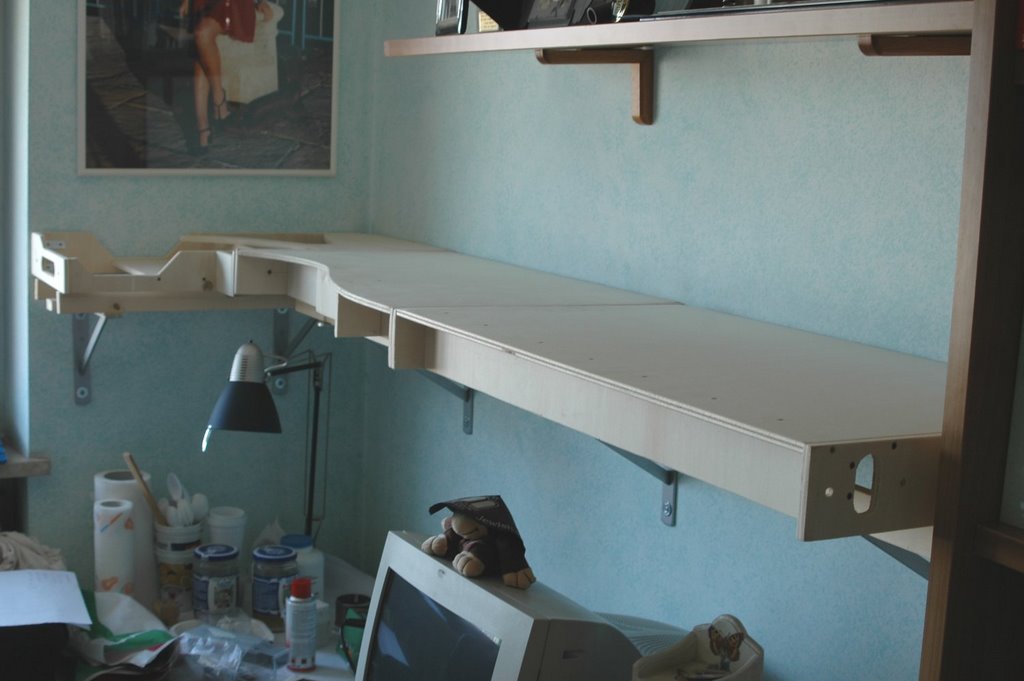
Yesterday, last day on holyday, I finished laying tracks: in fact I complete the small "industrial district" in Cretaz.
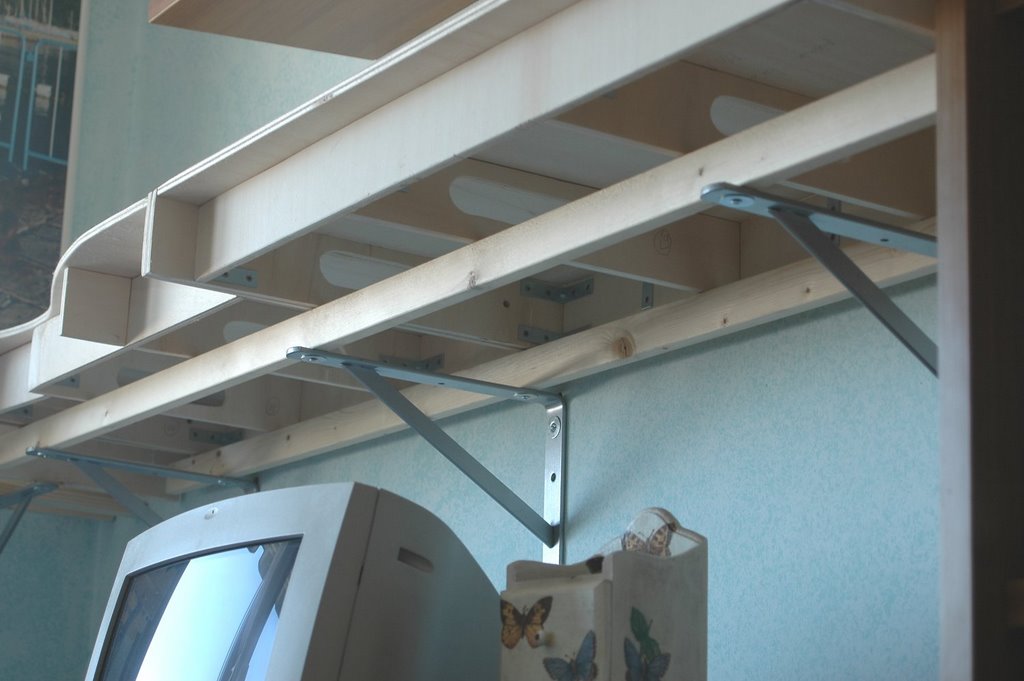
In the pictures you can see the final result. I roll up all cables under the benchwork.
Ieri, ultimo giorno di vacanza, ho terminato la posa dei binari, completando infatti la zona industriale di Cretàz. Nella foto potete vedere il risultato finale. I vari fili elettrici sono stati arrotolati sotto ai moduli.


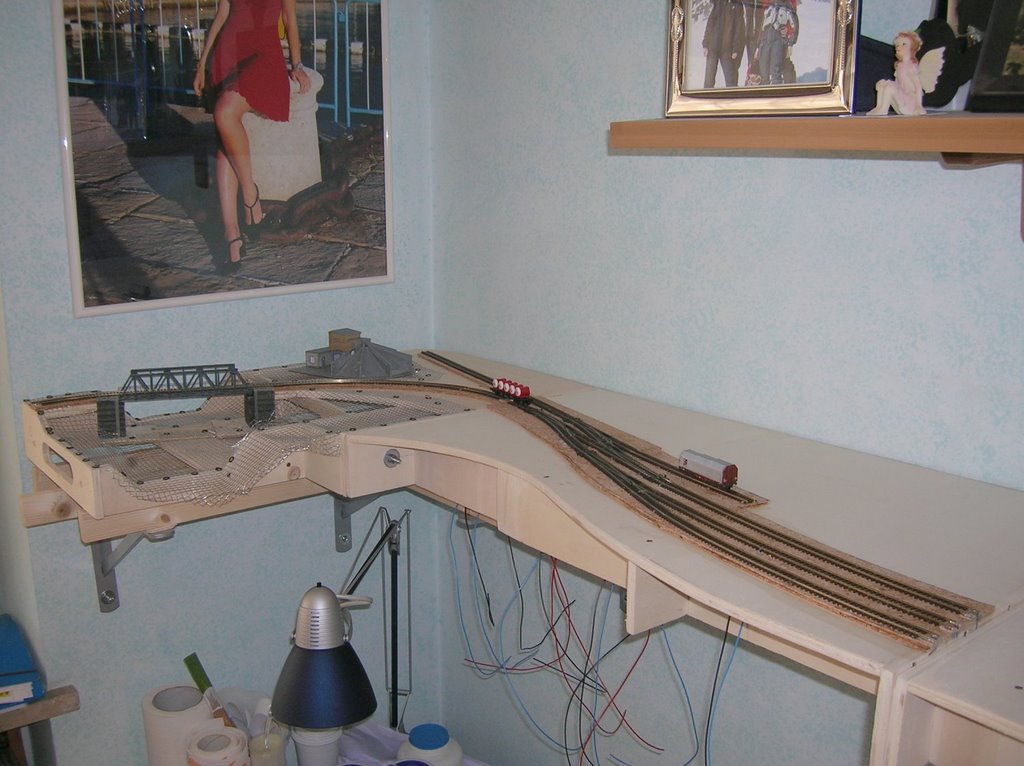
An overall view of the layout (from Lillàz).

Vista panoramica del plastico (da Lillàz).

13 agosto 2006

Tracks (module 2) / Binari (modulo 2)

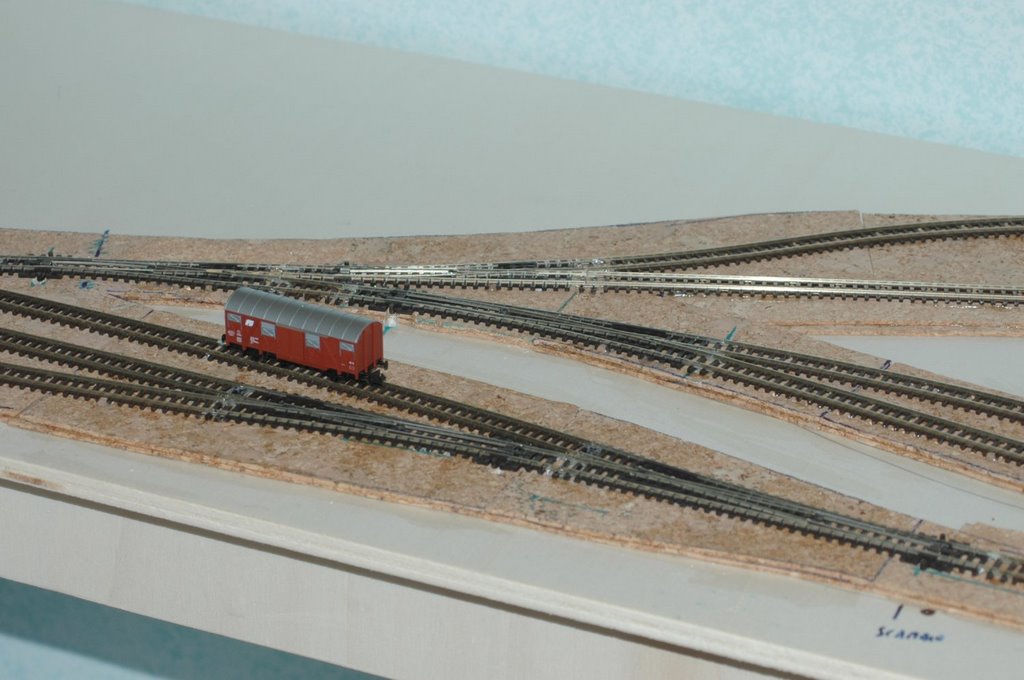
On August 13th, Italy's Stefano Baldini won the gold medal in the Men's Marathon during the European Athletics Championships in Goteborg, Sweden. I was so excited that I worked fast and in a couple of hours I completed the first part of Cretaz station tracks.
Il giorno 13 agosto l’italiano Stefano Baldini ha vinto la medaglia d’oro nella maratona ai Campionati Mondiali di Atletica a Goteborg, Svezia. Ero così contento che in un paio d’ore ho completato la prima parte dei binari della stazione di Cretàz.


A close view of the Pondèl side turnouts.

Un dettaglio degli scambi lato Pondèl.

12 agosto 2006

Tracks (module 1) / Binari (modulo 1)

During Summer holidays I had a lot of time to work on the layout.
After I received two Faller kits ordered from Lok Shop (Germany) on July, I started laying flextracks on the first module using selfmade cork roadbed and hot glue.
Then I modeled the bed of the river with wire screen and fixed it with screws and washers. The wire screen in the foreground will be trimmed once that the fascia will be installed.
Sand quarry Granulari Lauzet is not yet fixed.
Durante le ferie estive ho avuto parecchio tempo per lavorare sul plastico. Dopo aver finalmente ricevuto due kit della Faller ordinati in luglio a Lok Shop (Germania), ho iniziato a posare i binari sul primo modulo, utilizzando strisce di sughero come base e colla a caldo. Quindi ho modellato il letto del fiume con rete metallica e l’ho fissata al telaio con viti e rondelle. La parte di rete metallica in primo piana sarà ritagliata nella forma corretta quando inserirò la fascia. Le strutture della cava di sabbia Granulari Lauzet sono solo appoggiate al terreno.

11 agosto 2006

Cabling turnouts / Cablaggio scambi

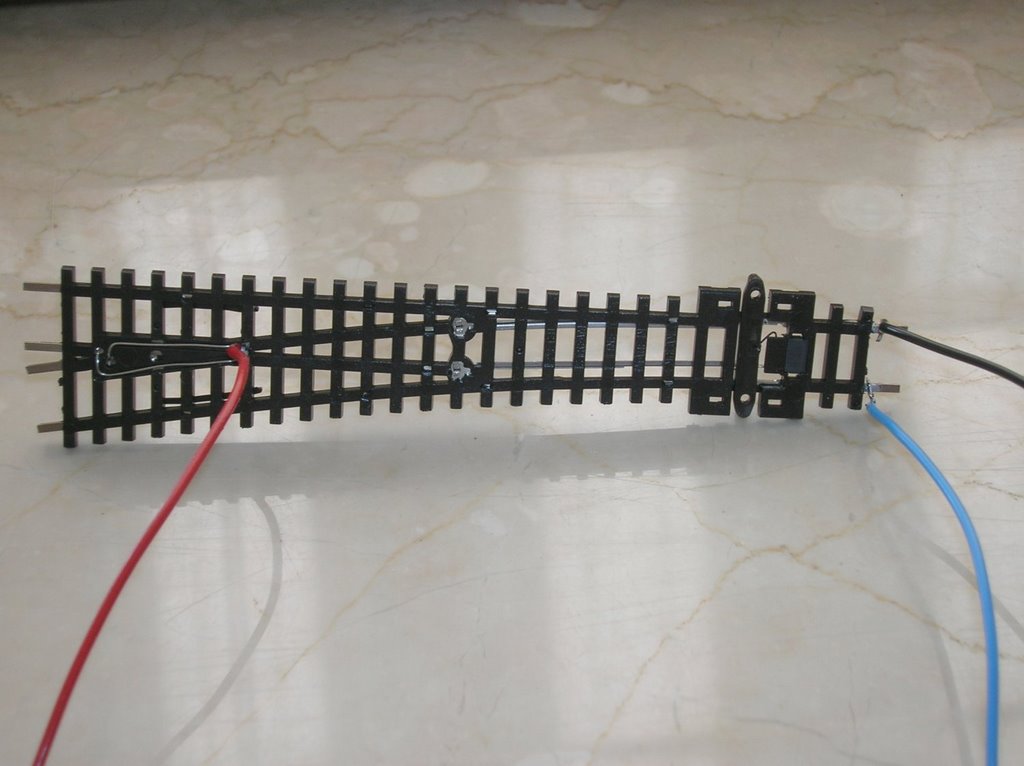
Thanks to my friend Andrea, before place on the cork roadbed, I solder power cables on turnout rails (black and blue wires). Besides, since I use Peco Electrofrog turnouts, I solder also a calble (red) on the live frog, to avoid any electrical problem (bad contact).
Grazie al consiglio del mio amico Andrea, prima di installarli sulla base in sughero, ho saldato i fili di alimentazione (nero e blu) alla radice degli scambi e poi, dato che sono del tipo Electrofrog, ho saldato un filo rosso al cuore degli stessi, in modo che anche in caso di cattivo contatto tra ago e rotaia, l’alimentazione non venga mai a mancare.

04 agosto 2006

Cretaz station layout / Piano schematico Stazione di Cretàz

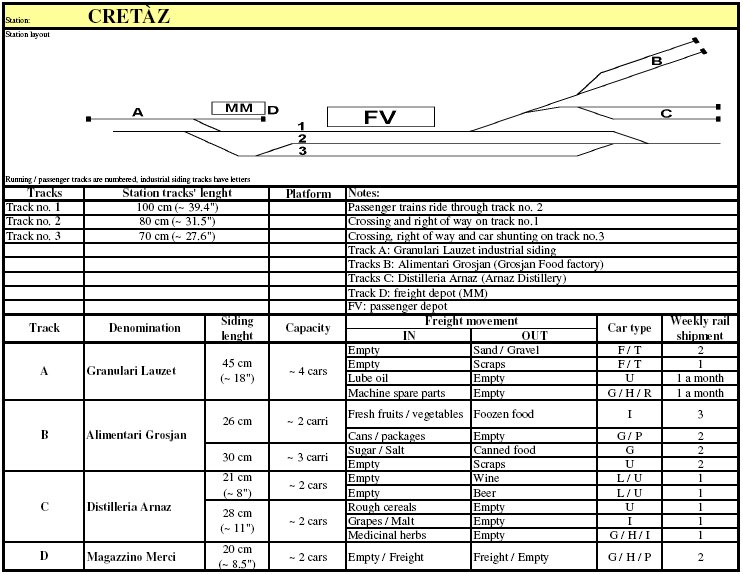
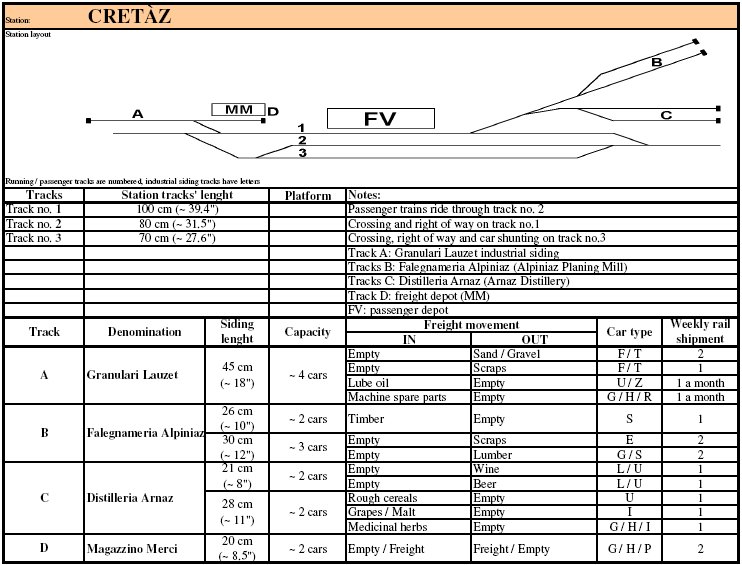
Today I draw Cretaz station's schematic plan so to fill out a rough waybill. I create two charts, one when I place Alimentari Grosjan (Grosjan Food Factory-yellow) and one for Falegnameria Alpiniaz (Alpiniaz planing mill-orange).
Oggi ho preparato il piano schematico della stazione di Cretàz ed una bozza di ordini di carico. Ho composto due tabelle, una per le sessioni con l’industria Alimentari Grosjan (giallo) ed una per quelle con la Falegnameria Alpiniaz (arancione).


01 agosto 2006

Industrial district / Raccordi industriali

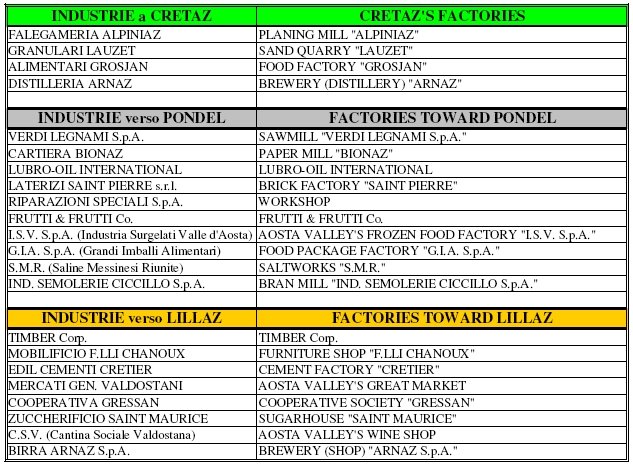
Building a layout does not mean you have only to cut wood or to place tracks, trees and houses. As written in my profile, I joined FREMO ITALIA's team few months ago and since then I start looking at model railroading from a different point of view, not so common in Italy nowadays: I will build a layout for shunting cars using a realistic timetable! First of all I placed some factories in the main town, Cretàz, then I installed many other industries along the railroad toward Pondèl and Lillàz, the Southern and Northern terminals. All the operational industries are shown in the table.
Costruire un plastico dedicato all’esercizio, per me, non significa solo tagliare il legno, posizionare binari, alberi e case. Come ho indicato nel mio profilo, mi sono unito al team FREMO ITALIA alcuni mesi fa e da allora ho iniziato a veder il modellismo ferroviario sotto un’altra luce, oggigiorno non molto comune in Italia: il mio desiderio è quello di costruire un layout adatto alla movimentazione dei treni con un orario estremamente realistico! Per cominciare ho installato alcune fabbriche nel paese principale, Cretàz, dopodiché ho piazzato parecchie industrie, raccordate alla ferrovia, verso Pondèl e verso Lillàz, i “capolinea” Sud e Nord. Tutte le industrie attive sono indicate in tabella.

Cretàz is a small town which has few industries (see updated plan), all with local names. They are:
  • Sand quarry "Lauzet" (Granulari Lauzet): a small industry settled near the river. It pick up empty cars and sets out cars full of sand, gravel, etc;
  • Food factory "Grosjan" (Alimentari Grosjan): a medium factory that works fresh fruits and vegetables; alternatively I can substitute it with planing mill "Alpiniaz" (Falegnameria Alpiniaz), which instead works lumber to manufacture furniture;
  • Brewery "Arnaz" (Distilleria Arnaz): a small distillery that mainly produce the world famous beer "Arnaz"; also it produces alcohols, especially made of medicinal herbs;
  • The depot (Magazzino Merci) near passenger station will help minor goods exchanges.

Cretàz è un piccolo centro abitato molto attivo con poche industrie (vedere l’aggiornamento dello schema), tutte con nomi tipici. Esse sono:

  • Granulari Lauzet: piccola cava vicino al fiume dalla quale si estraggono sabbia, sassi, ecc.;
  • Alimentari Grosjan: fabbrica di medie dimensioni che lavora verdura e frutta fresca. Alternativamente può essere sostituita dalla Falegnameria Alpiniaz, che, ovviamente, lavora legname vario per produrre mobilio;
  • Distilleria Arnaz: piccola distilleria che produce la famosa birra “Arnaz®”; inoltre ha anche una discreta produzione di alcolici a base di erbe mediche;
  • Magazzino Merci: situato vicino alla stazione, è utile per lo smistamento di merci generiche di medie e piccole dimensioni.

24 luglio 2006

Module construction / Costruzione dei moduli

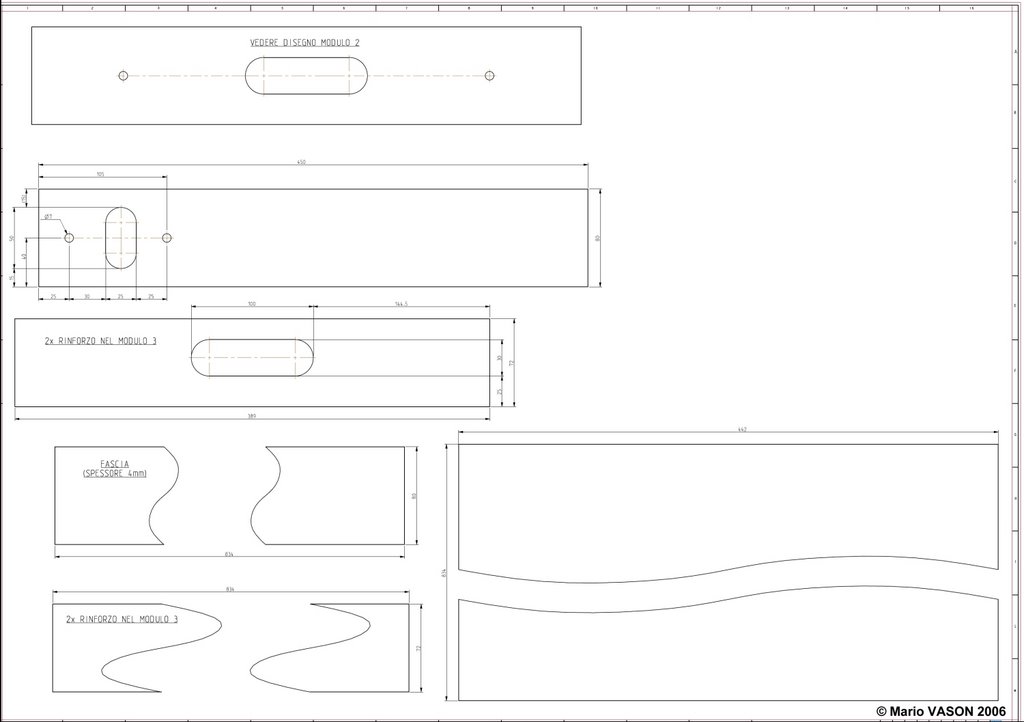
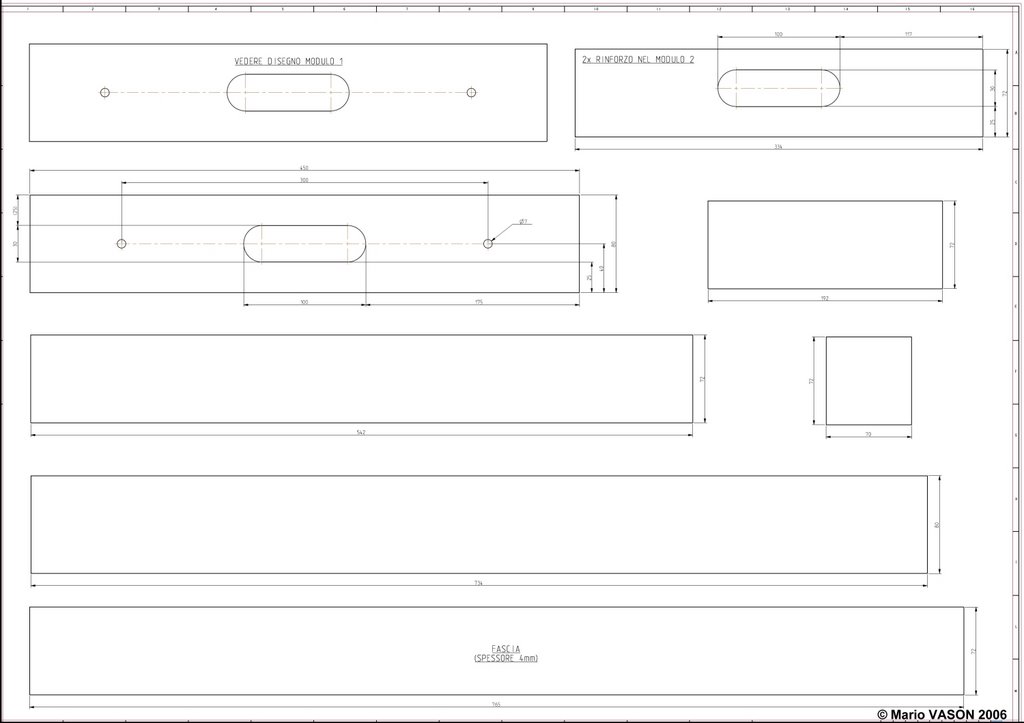
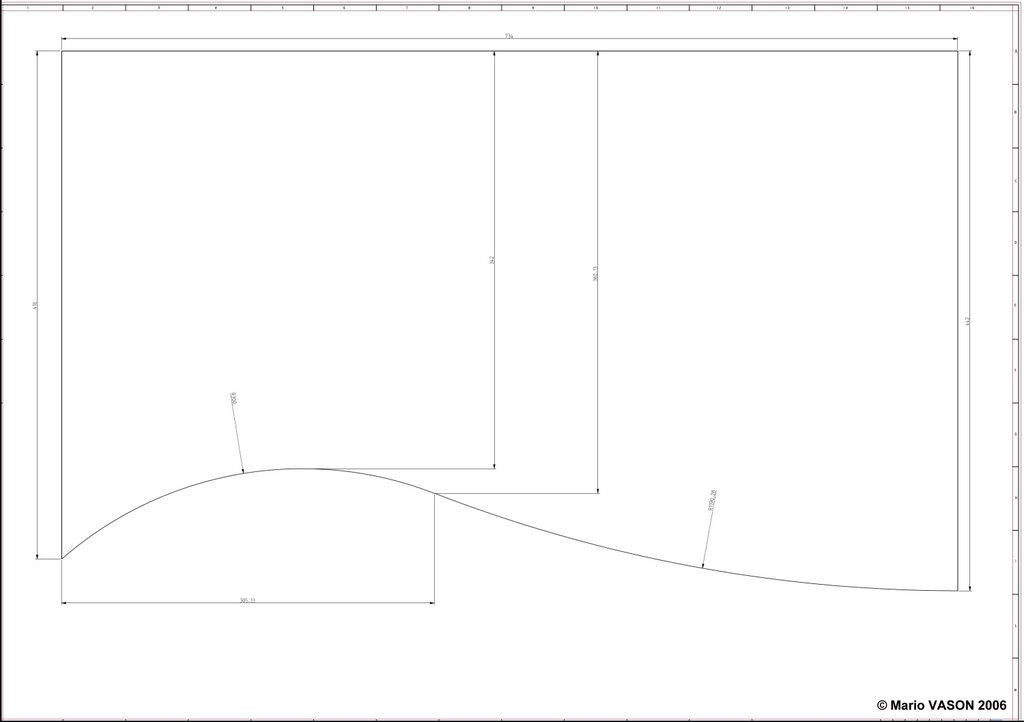
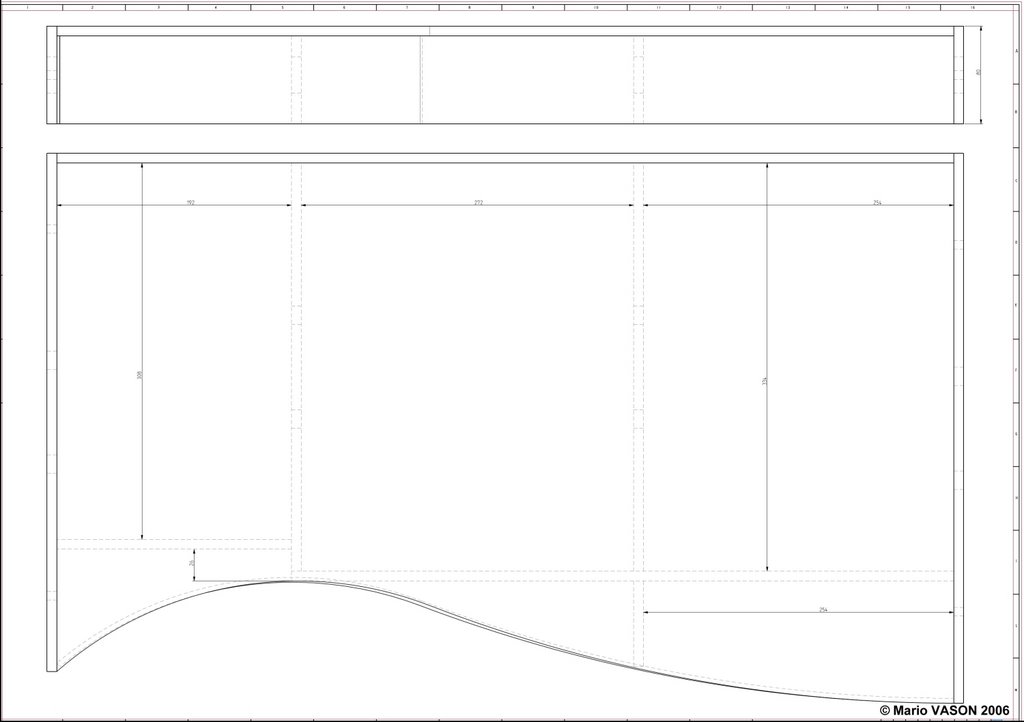
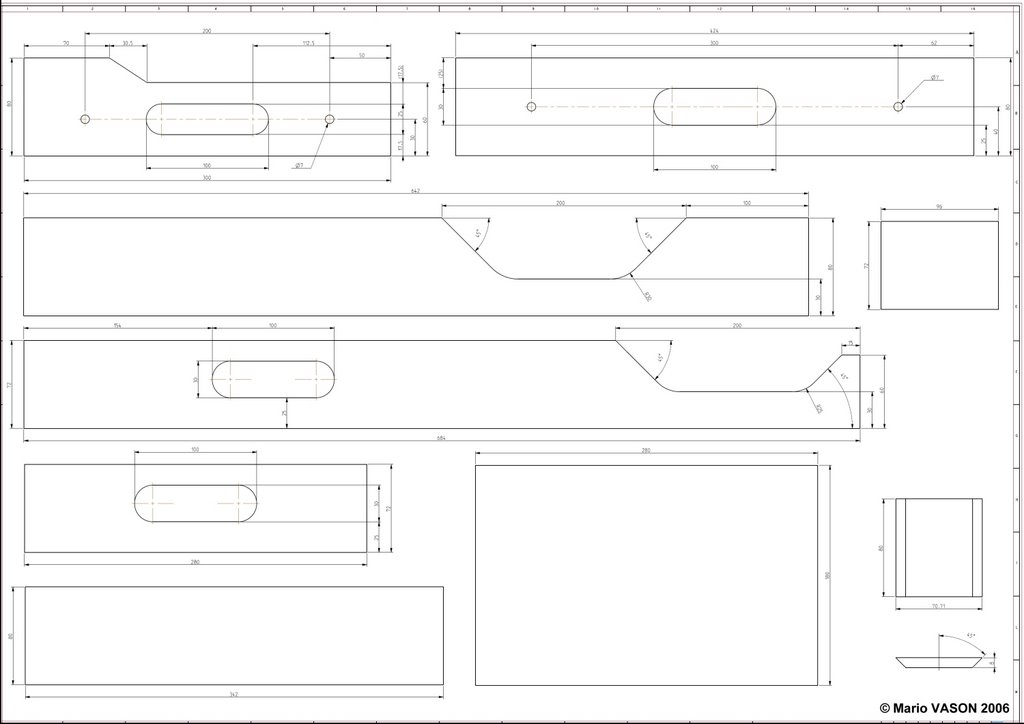
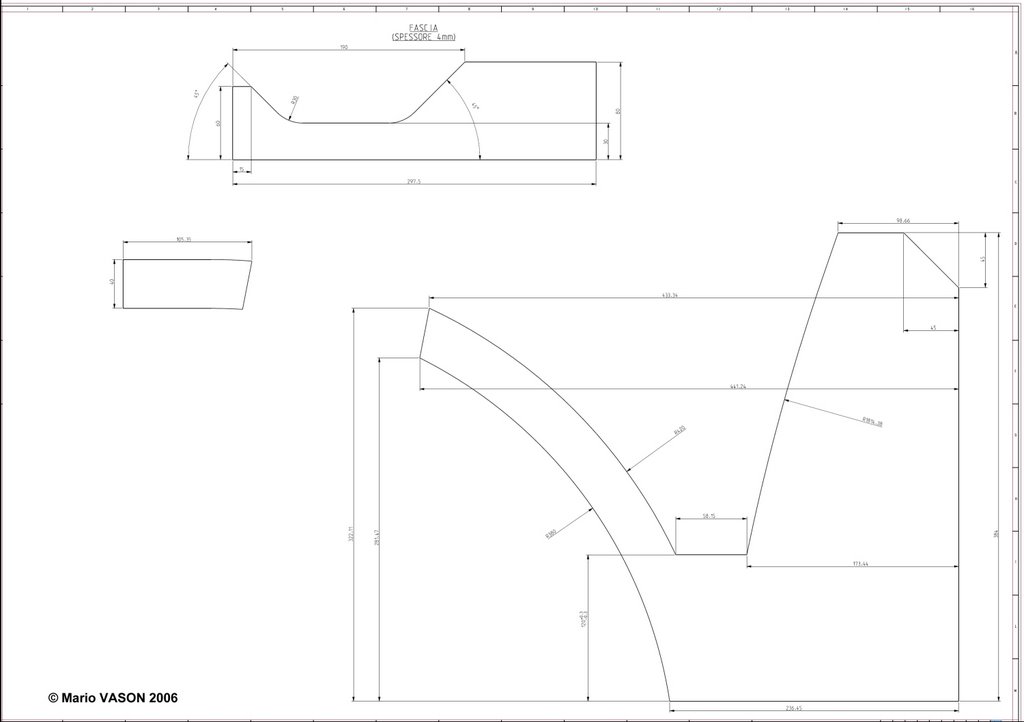
The past weekend, thanks to the hot “African” temperature, I worked in my cool garage on the three module frames. After cutting plywood as shown in drawings, I assembled the modules and then I placed them onto supports.
Il weekend appena trascorso, grazie alle temperature “africane”, ho potuto lavorare sui tre moduli in garage, al fresco. Dopo il taglio del compensato ho assemblato i componenti e poi ho appoggiato i moduli appena finiti sul telaio.


21 luglio 2006

Electrical layout / Circuito elettrico

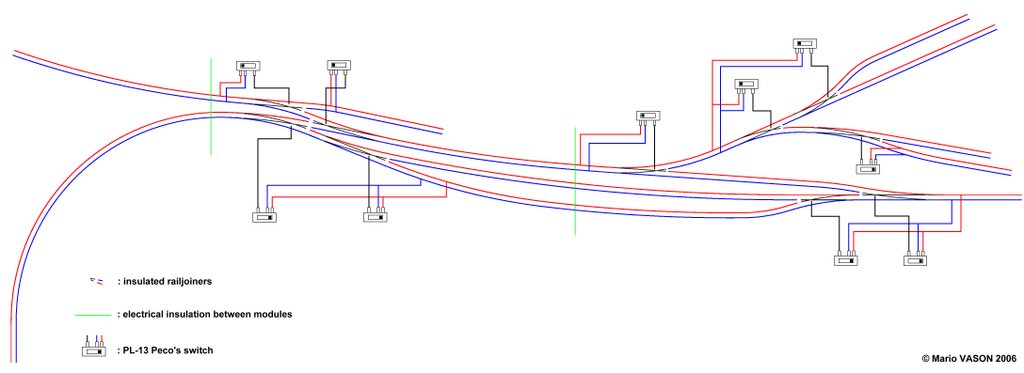
After a technical meeting with Andrea and Pik (Franco's nickname, a HO's friend of mine), I sketch the electrical layout you can see in the picture. It is only a proof sheet. All red and blue tracks have to be powered; electrofrog turnouts need Peco's PL-13 switches to change polarity when turned.
Al termine di una “riunione tecnica” con Andrea e Pik (soprannome di Franco, un mio amico “accazerista”) ho disegnato una bozza del circuito elettrico. Tutti i fili rossi e blu devono essere alimentati, inoltre gli scambi PECO Electrofrog necessitano di un interruttore dedicato (PECO PL13) per cambiare polarità quando vengono azionati.
20 luglio 2006

Third module drawings / Disegni del terzo modulo

Last module (Lillàz side) drawings are on line.
Ora anche I disegni dell’ultimo modulo (lato Lillàz) sono pronti.


18 luglio 2006

First module drawings / Disegni del primo modulo

I just completed first (Pondèl side) module drawings and printed in 1:1 scale. Next weekend I will start cutting plywood :-)
Ho appena completato il disegno del primo modulo (lato Pondèl) e l’ho stampato in scala 1:1. Il prossimo weekend inizierò a tagliare la legna :-)


14 luglio 2006

Module frame / Struttura dei moduli

Today I start designing module frames (open-grid), made of plywood and assembled with 90° steel brackets and Phillip screws. In order to save time and material, I prepare first a 3D model, so to perform Finite Element Analysis on it... no, I'm joking :-)))
Next week I will sketch some technical drawings with dimensions.
Oggi ho iniziato il progetto del telaio dei moduli, costruito in legno compensato ed assemblato con staffette metalliche a 90° e viti Phillip autofilettanti. Per non sprecare tempo e materiale ho preparato prima un modello tridimensionale al CAD in modo da poter effettuare un’Analisi agli Elementi Finiti…stavo scherzando :-)))
La prossima settimana preparerò anche i disegni bidimensionali con tutte le quote necessarie.

13 luglio 2006

Layout displaying / Sovrapposizione del tracciato

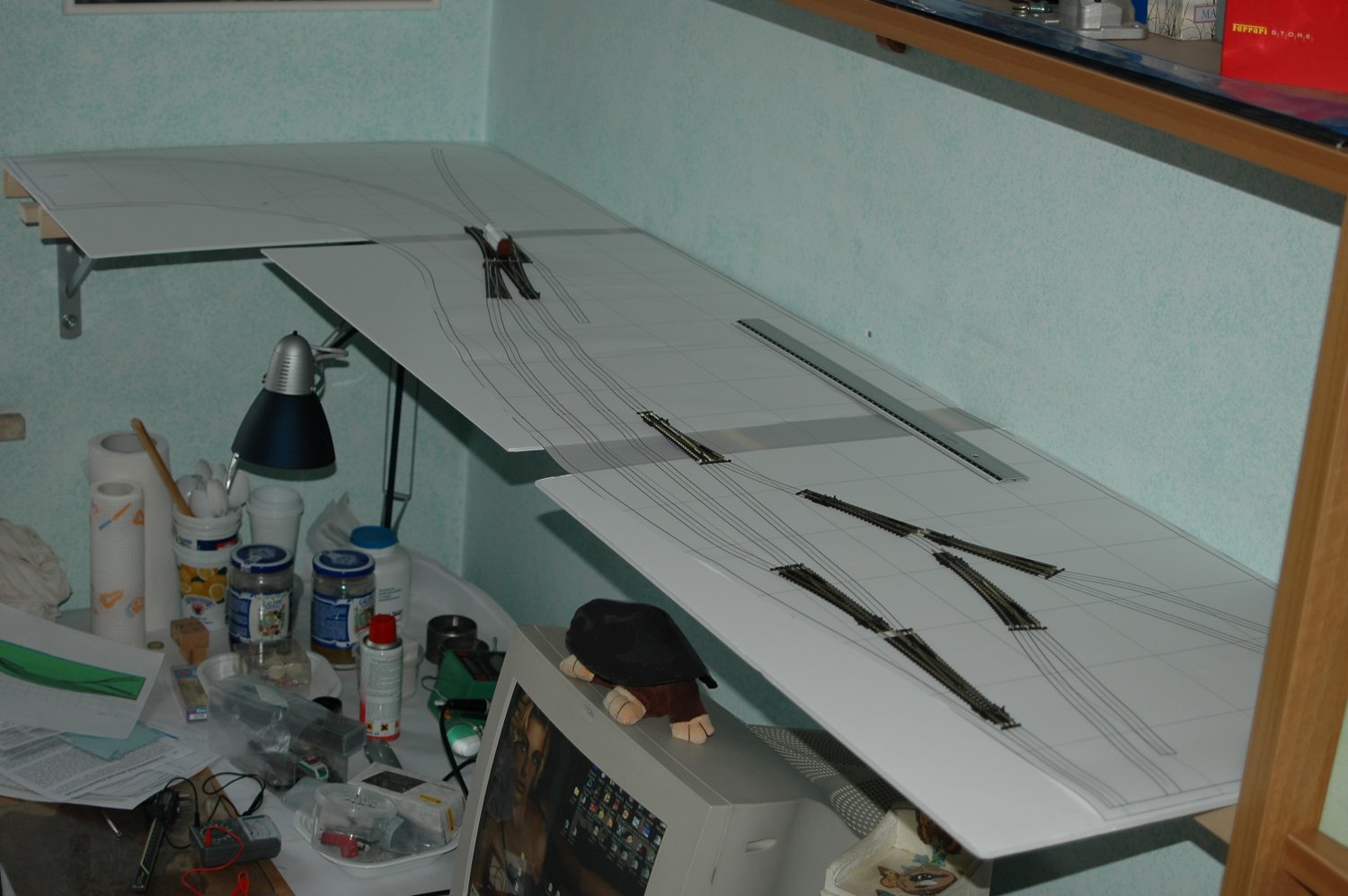
Yesterday I displayed a 1:1 scale drawing of the layout, overlapping turnouts, and saw if my CAD modelling was right. Wow, they fitted perfectly! It is a worthy test, in case of future changes or… new layout plans! Besides, it is very useful to have true scale track plan in front of your eyes, at the right height: in fact you can immediately see volumes and distances, measure freight and passenger trains length, studying ambient lights, etc.
Ieri ho appoggiato sulle travi un disegno del tracciato in scala 1:1 e ho sovrapposto gli scambi PECO per vedere se il disegno al CAD era esatto. Wow, si sovrapponevano perfettamente! Questo è un risultato positivo, nel caso di future modifiche o di nuovi progetti. Inoltre è molto utile vedere una rappresentazione grafica in scala reale all’altezza finale: si possono subito verificare volumi e distanze, misurare la lunghezza dei treni merci e passeggeri nei binari di precedenza e nei raccordi, studiare la luce ambiente, ecc.

10 luglio 2006

Frame mounted / Telaio assemblato

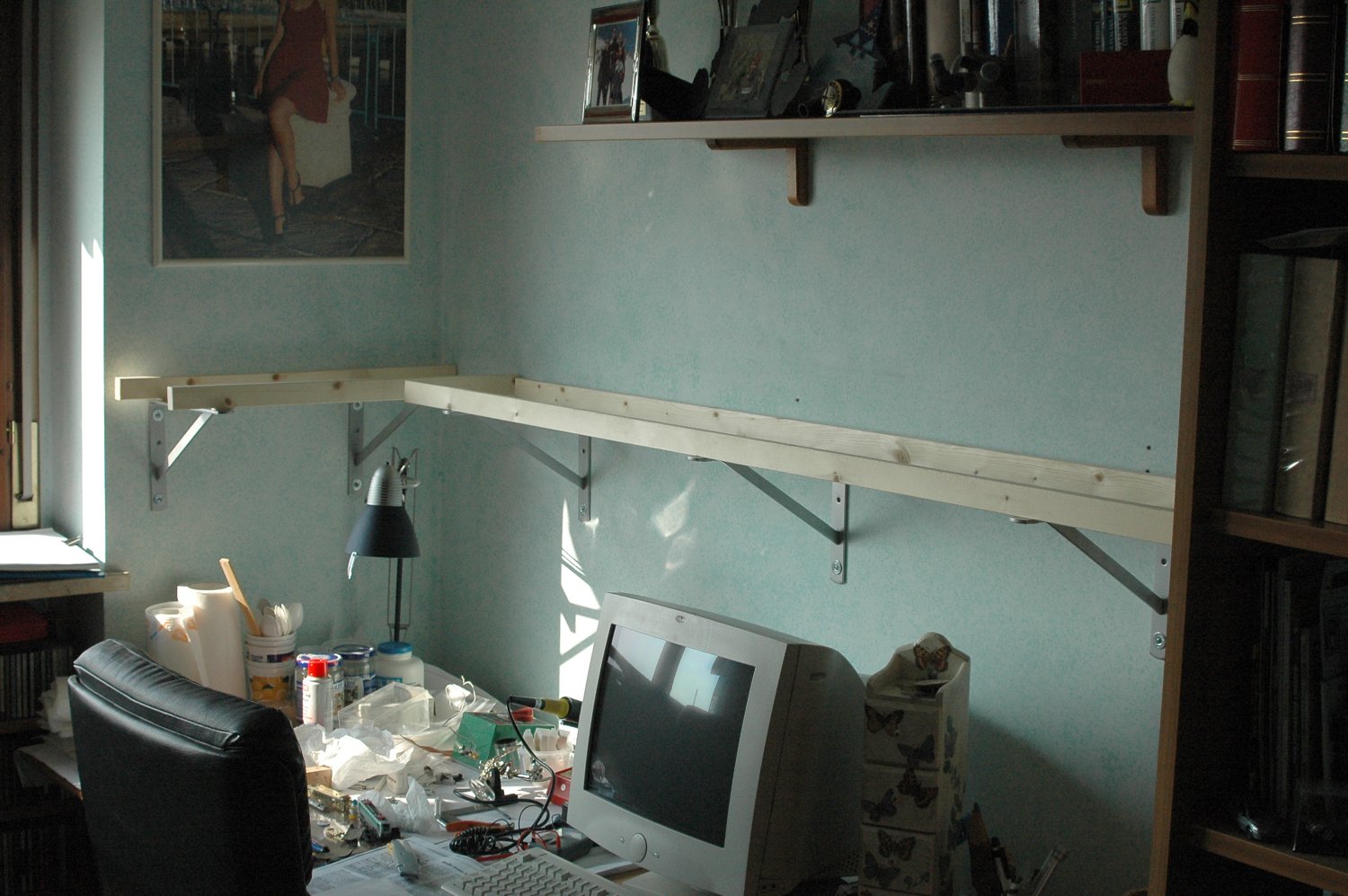
Last Saturday (July, 8th), coming back from an exciting shunting session over my friend Denny’s Kopfbergbahn layout (http://kopfbergbahn.calogero.org/index.php), in a couple of hours I fixed brackets and girders.
Lo scorso sabato (8 luglio 2006), di ritorno da una emozionante sessione operativa sul plastico del mio amico Denny (Kopfbergbahn, sito internet: http://kopfbergbahn.calogero.org/index.php), ho montato in un paio d’ore le staffe al muro e le travi.

05 luglio 2006

Brackets & girders / Staffe & travi

After planning the layout, I studied the frame: simply, I used five L steel brackets and four timber girders. Here you can see the drawing.
Una volta terminato il progetto mi sono dedicato alla struttura dei moduli ed al loro fissaggio al muro. Ho quindi preparato una struttura fissa composta da 5 staffe ad L in acciaio e 4 travi in legno. Nella figura è mostrato il tutto assemblato.