20 novembre 2006

Pondèl-side track / Curva verso Pondèl

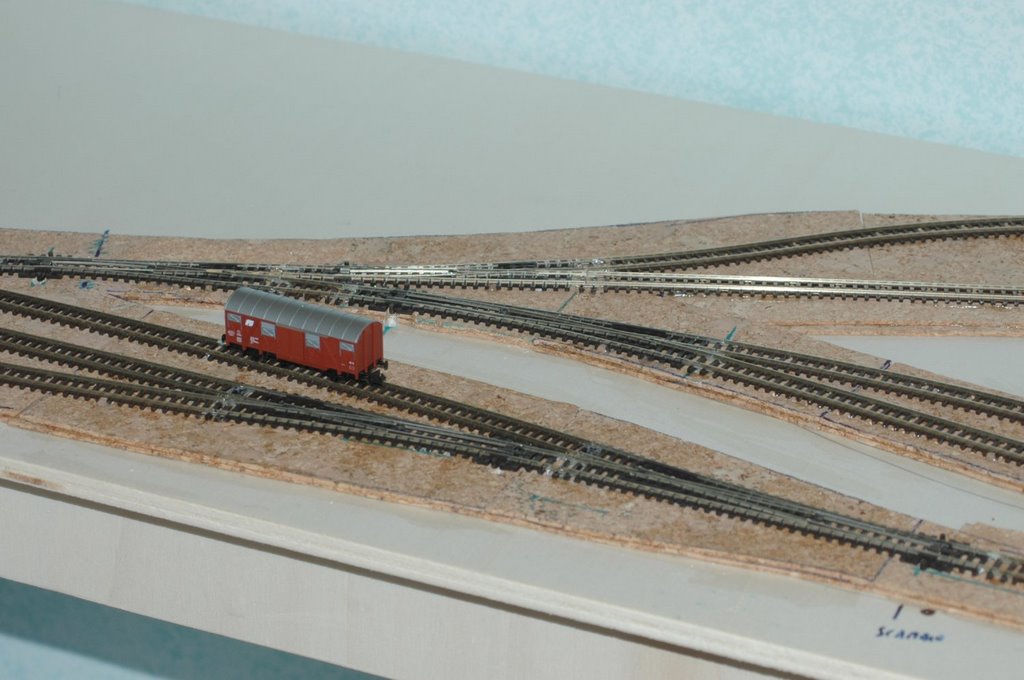
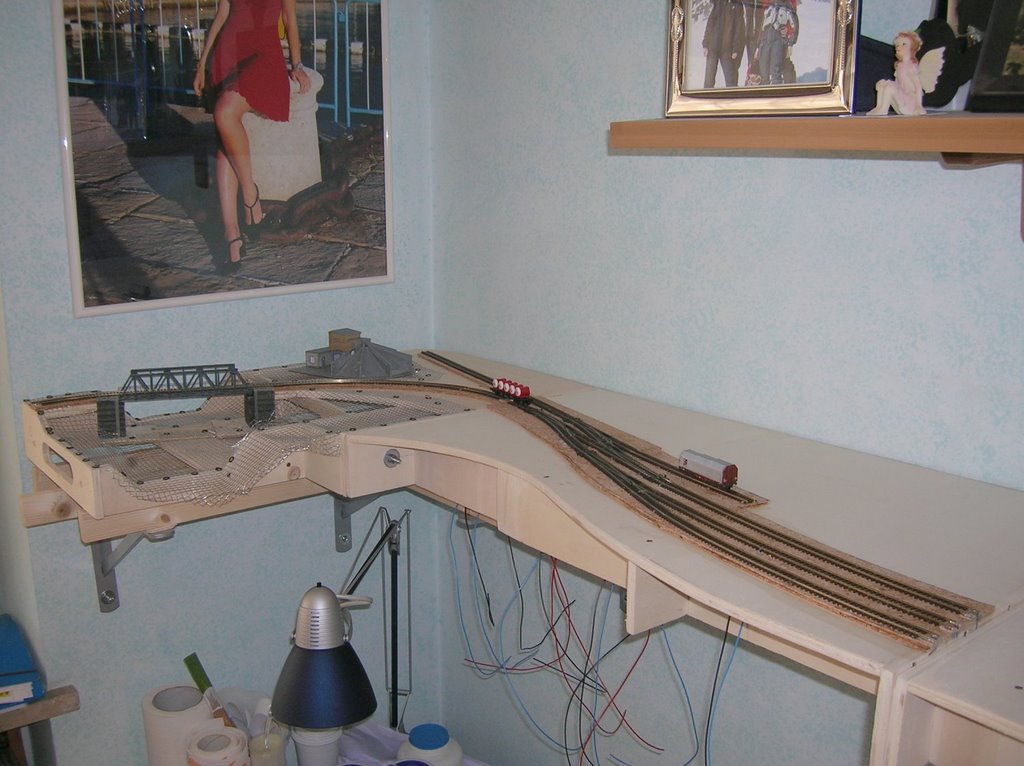
One evening last Summer Franco, a fellow modeler, visited the newborn layout; he liked the whole idea but he noticed at once that something was wrong: the curve track (Pondèl side) was too narrow! Actually this radius (~R1) was necessary because I needed room for Granulari Lauzet buildings and for the bridge over the river. Of course I never liked such plan completely, moreover I began to manoeuvre locos and cars that hardly travel in this part of railroad. Finally I fix it making a wider curve and removing all friction problems. In some way I will fit the Faller kit to the reduced space.
Una sera d'estate il mio amico modellista Franco è venuto a trovarmi e a dare un'occhiata al plastico nascente; subito gli è saltato all'occhio il raggio ristretto del binario lato Pondèl. Tale raggio (~R1) era dettato dal fatto che avevo bisogno di spazio per gli edifici della Granulari Lauzet e per il ponte sul fiume. In effetti tale soluzione iniziale non mi era mai piaciuta del tutto, in più ho iniziato ad avere, tra il mio parco rotabili, automotrici e vagoni che percorrevano a fatica questo tratto. Alla fine mi sono deciso e ho riposizionato il binario facendogli fare una curva più ampia ed eliminando i problemi di scorrimento sopraccitati. In qualche modo poi adatterò il kit Faller allo spazio più ristretto.

08 novembre 2006

Turnout switches / Interruttori degli scambi (2)

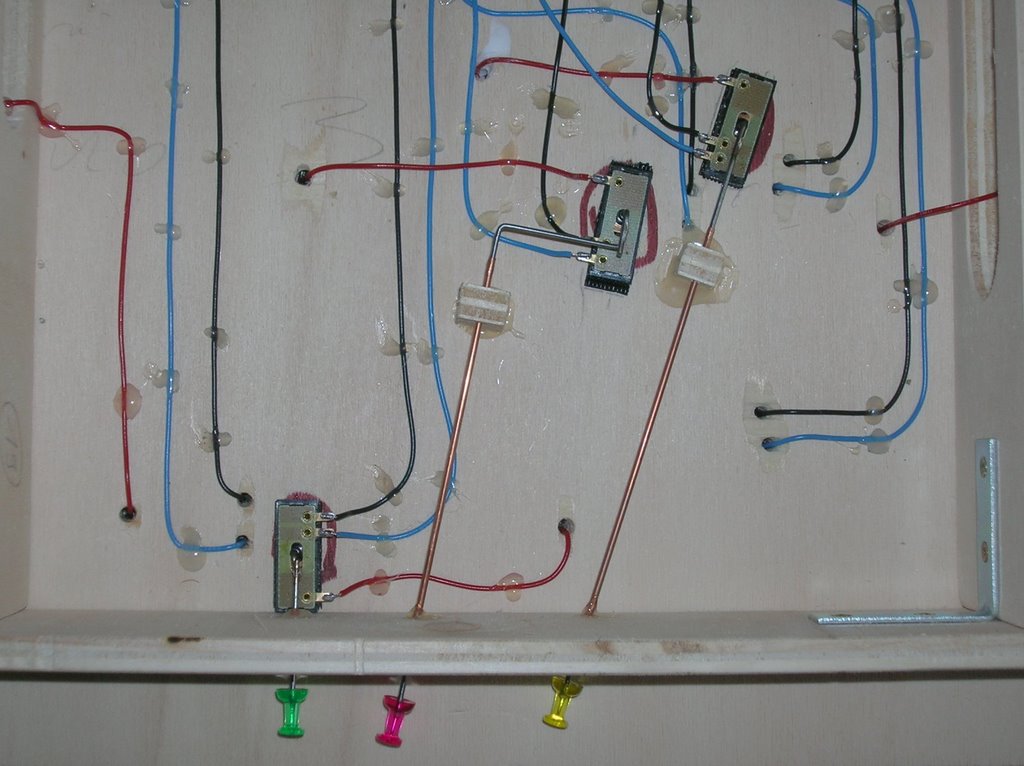
After more than one month, I layed all PECO PL-13 switchers under turnouts. Operators can now easily switch them grabbing comfortable coloured knobs.
Dopo più di un mese di lavoro (saltuario) ho completato la posa degli interruttori PECO PL-13 sotto gli scambi. Ora tutti sono comandabili mediante una comoda manopola colorata.

05 ottobre 2006

Schedule / Orario

Even if it seems too soon, I have sketched a typical schedule for a session conducted by an operator; it also would be a great deal even if managed by two engineers. Schedule involves freights (outlined lines) and commuter trains (continuous lines), coming both from Pondèl and from Lillàz. The most fun will be managing waybills of the freight trains, while various passenger trains will cross CretàzCretàz, creating "nice" chaotic situations.
Potrebbe sembrare prematuro, ma ho già iniziato ad abbozzare l’orario tipico per una sessione condotta da un operatore, ma potrebbe essere divertente anche se gestita da due manovratori. Il materiale rotabile ordinario è composto da treni merci (linee tratteggiate) e da treni passeggeri (linee continue), provenienti sia da Pondèl sia da Lillàz. Il divertimento consisterà maggiormente nel gestire gli ordini di carico dei treni merci, mentre i vari treni passeggeri si incroceranno o attraverseranno la stazione di Cretàz creando “simpatiche” situazioni caotiche.


04 ottobre 2006

Turnout switches / Interruttori degli scambi (1)

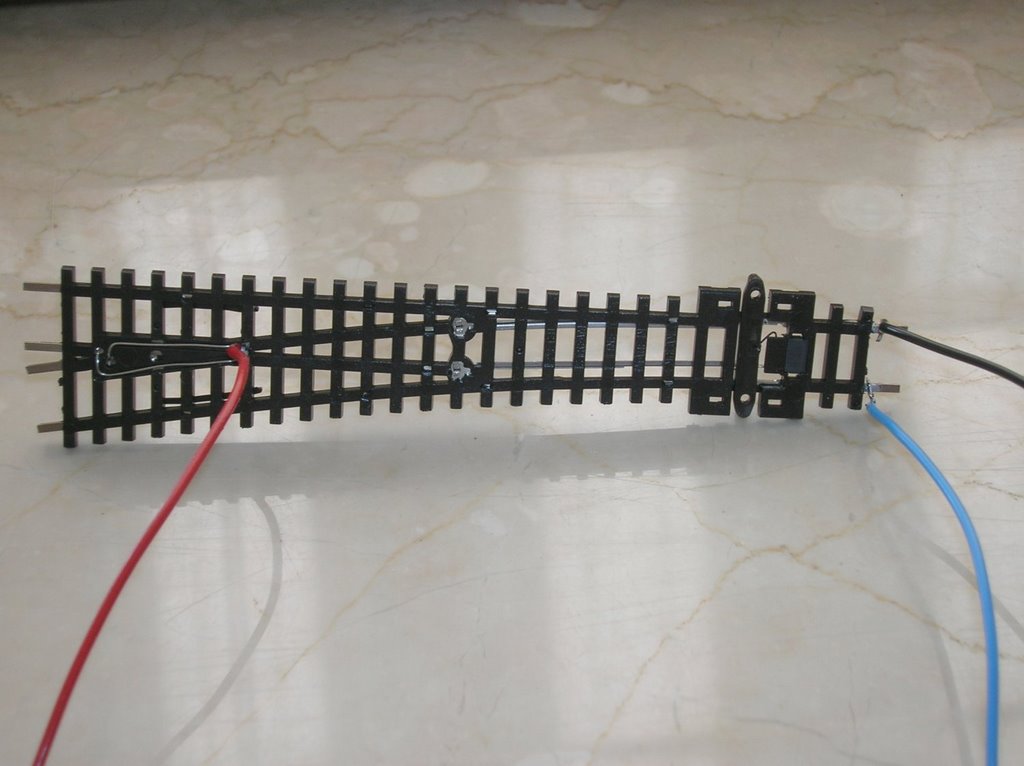
I have finally reached the crucial point: the assembly of the PECO PL-13 switches below Electrofrog turnouts. Thanks to the experience done by my "FREMOhicani" friends, I experimented a new technique for switch positioning. As engineer, I well know that all things don't have endless life and that, sooner or later, I will have to face the problem to replace one of these switches, because contacts will oxidize or they’ll wear out. The second point is the stiffness of the system, I mean I want to avoid any bending of the steel rod during turnout operations. Starting from this requirements, just before summer, talking to a colleague about my hobby, he showed me an hook-and-loop type fastener strip better of those that are usually used in clothing. I decided therefore to try it, thanks to its high resistance both on the plan (x, y) and in its perpendicular direction (z), the “tear” direction. Cutting two rectangles and creating slots inside for the rods, I have fixed one part to the switch and the other half to the bottom side of the layout. Then, following literally the assembly instructions wisely written and illustrated by my friend Denny in his site
(
http://kopfbergbahn.calogero.org/index.php?page=modello/tips_tricks/deviatoi.html)
I exactly placed the switch group in the middle of the turnout. Rods are made of stainless steel (diameter 1.5 mm). To avoid any problem of bending (and consequent partial or missed driving of the switch), I insert the rods inside copper pipes (inside diameter 1.6 mm), well lubricated with grease, and drilled wood blocks glued to layout. In first applications, due to the short length of the rod, I preferred to use a whole tube; for greater lengths, the rod will be driven only in limited lenght, those in which it risks to bend. Also, to guarantee the disassembly in case of substitutions, I split the rod in two parts soft soldered, so to keep an extremely rigid connection, but at the same time, with a normal welder, anyone can easily separate it. Here you can see the work done on first turnouts.
Finalmente sono arrivato al punto cruciale: l’installazione degli interruttori PECO PL-13 al di sotto degli scambi. Avendo fatto tesoro dell’esperienza dei miei amici “FREMOhicani”, ho sperimentato una nuova tecnica per il posizionamento dell’interruttore. Da buon ingegnere so bene che tutte le cose non hanno vita infinita e che, prima o poi, mi dovrò confrontare con il problema di sostituire uno di questi interruttori, vuoi perché si ossideranno i contatti, vuoi perché si usurerà. Il secondo punto che vorrei assolutamente rispettare è la rigidezza del sistema, cioè voglio evitare ogni problema di flessione dell’astina durante l’azionamento del comando. Partendo da questi presupposti, poco prima dell’estate, parlando del mio hobby con un collega, questi mi ha mostrato un pezzo di velcro (adesivo) a strappo un po’ più serio di quelli che abitualmente si utilizzano nell’abbigliamento. Ho deciso quindi di provarlo, grazie alla sua alta resistenza sia sul piano (x, y) che in direzione ad esso ortogonale (z), la direzione di “strappo”. Tagliando con un cutter due rettangoli di giuste dimensione e creando le asole al loro interno per l’asta di comando, ne ho fissato una metà all’interruttore e l’altra metà al piano inferiore del plastico. Seguendo poi, per filo e per segno, le indicazioni di montaggio dell’interruttore sapientemente scritte ed illustrate dal mio amico Denny nel suo sito
(
http://kopfbergbahn.calogero.org/index.php?page=modello/tips_tricks/deviatoi.html)
ho posizionato il gruppo esattamente a metà corsa dell’asta dello scambio. Le astine sono realizzate con fili d’acciaio armonico di diametro 1.5 mm. Per evitare ogni problema di flessione (e conseguente parziale o mancato azionamento dell’interruttore) ho deciso di inserire le astine all’interno di tubetti in rame di diametro interno 1.6 mm, opportunamente lubrificati con grasso ed incernierati a blocchetti di legno. In questa soluzione, data la relativa lunghezza dell’astina, ho preferito utilizzare un tubetto intero; per lunghezze maggiori, l’astina sarà guidata solo in certi punti, quelli in cui rischia di flettere. Anche qui, per garantire lo smontaggio in caso di sostituzioni, ho preferito dividere l’astina in due parti e saldarle tra di loro, cosicché mantengano un collegamento estremamente rigido, ma al tempo stesso, con un normale saldatore a stagno, si possano facilmente separare. Ecco come si presenta il lavoro per i primi scambi elettrificati.


04 settembre 2006

Cabling the layout / Cablaggio del plastico

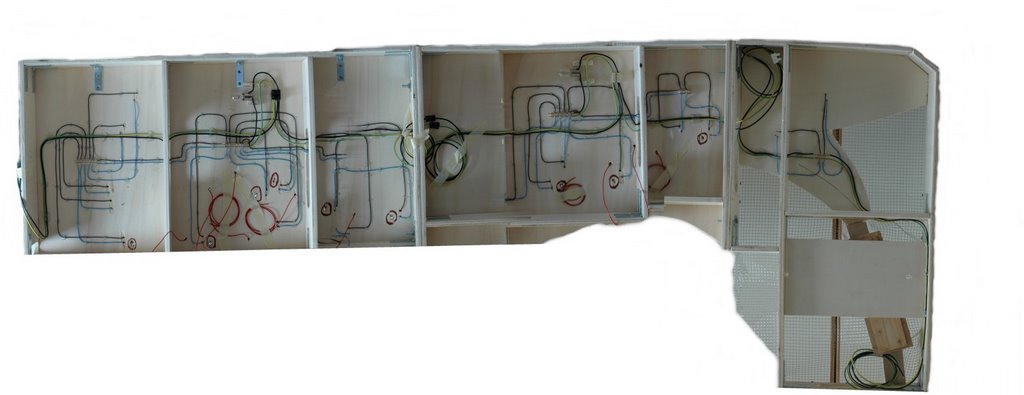
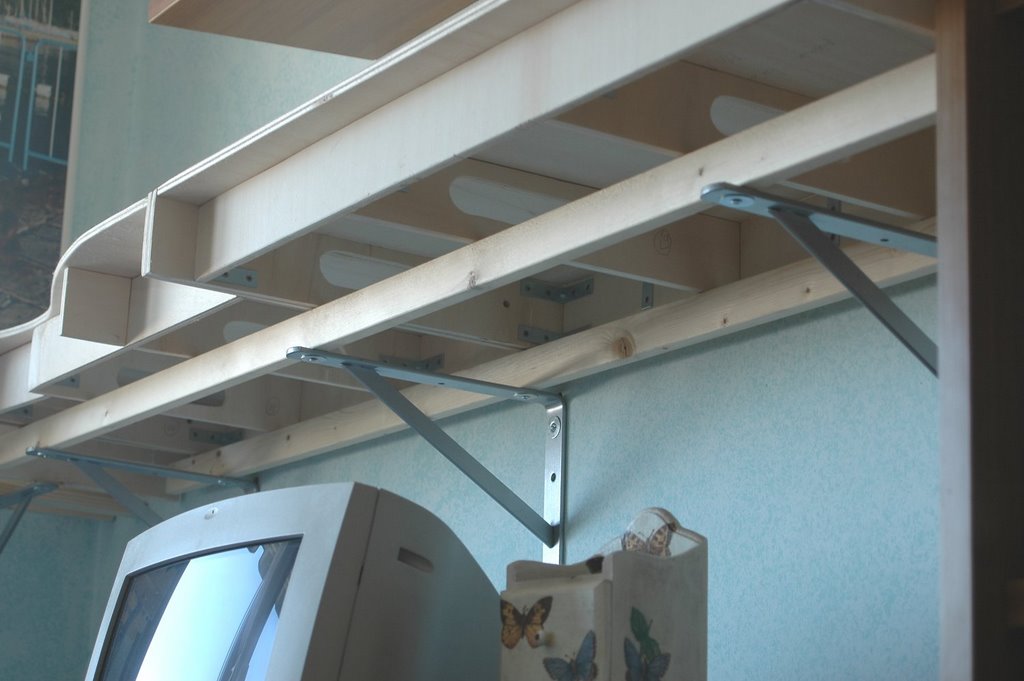
During last weekend I displayed power cables under the layout. I glued blue and black wires (AC power), while red wires, from turnout frogs, are still disconnected.
I also placed two 21W light bulbs: these should avoid a complete black out during FREMO operative sessions, if a short circuit happens somewhere in Cretàz Station. I haven't yet tell other members I would like to use Cretàz Station as FREMO module (only modules 2 and 3), but maybe in the future... ;-)
In the picture below you can see the work I've done. Don't mind curved borders, the image is a patch of 4 photos.
Durante lo scorso weekend ho disposto i fili di alimentazione sotto al plastico. Con la colla a caldo ho fissato al legno i fili blu e nero (alimentazione), mentre i cavi rossi, collegati ai cuori degli scambi, sono ancora scollegati.
Ho anche interposto 2 lampadine da 21W con lo scopo di prevenire black out dell’intero impianto durante le sessioni operative FREMO, qualora si verificasse un cortocircuito nella stazione di Cretàz. Non l’ho ancora detto agli altri soci, ma mi piacerebbe poter utilizzare Cretàz come modulo FREMO (solo i moduli 2 e 3), chissà… in futuro ;-)
Nell’immagine sottostante potete vedere il lavoro completo. Non fate caso ai bordi curvi del plastico, ho cercato di fare un’unione di 4 foto, ma purtroppo non è venuta benissimo.

28 agosto 2006

Tracks (module 3) / Binari (modulo 3)

Yesterday, last day on holyday, I finished laying tracks: in fact I complete the small "industrial district" in Cretaz.
In the pictures you can see the final result. I roll up all cables under the benchwork.
Ieri, ultimo giorno di vacanza, ho terminato la posa dei binari, completando infatti la zona industriale di Cretàz. Nella foto potete vedere il risultato finale. I vari fili elettrici sono stati arrotolati sotto ai moduli.


An overall view of the layout (from Lillàz).

Vista panoramica del plastico (da Lillàz).

13 agosto 2006

Tracks (module 2) / Binari (modulo 2)

On August 13th, Italy's Stefano Baldini won the gold medal in the Men's Marathon during the European Athletics Championships in Goteborg, Sweden. I was so excited that I worked fast and in a couple of hours I completed the first part of Cretaz station tracks.
Il giorno 13 agosto l’italiano Stefano Baldini ha vinto la medaglia d’oro nella maratona ai Campionati Mondiali di Atletica a Goteborg, Svezia. Ero così contento che in un paio d’ore ho completato la prima parte dei binari della stazione di Cretàz.


A close view of the Pondèl side turnouts.

Un dettaglio degli scambi lato Pondèl.

12 agosto 2006

Tracks (module 1) / Binari (modulo 1)

During Summer holidays I had a lot of time to work on the layout.
After I received two Faller kits ordered from Lok Shop (Germany) on July, I started laying flextracks on the first module using selfmade cork roadbed and hot glue.
Then I modeled the bed of the river with wire screen and fixed it with screws and washers. The wire screen in the foreground will be trimmed once that the fascia will be installed.
Sand quarry Granulari Lauzet is not yet fixed.
Durante le ferie estive ho avuto parecchio tempo per lavorare sul plastico. Dopo aver finalmente ricevuto due kit della Faller ordinati in luglio a Lok Shop (Germania), ho iniziato a posare i binari sul primo modulo, utilizzando strisce di sughero come base e colla a caldo. Quindi ho modellato il letto del fiume con rete metallica e l’ho fissata al telaio con viti e rondelle. La parte di rete metallica in primo piana sarà ritagliata nella forma corretta quando inserirò la fascia. Le strutture della cava di sabbia Granulari Lauzet sono solo appoggiate al terreno.

11 agosto 2006

Cabling turnouts / Cablaggio scambi

Thanks to my friend Andrea, before place on the cork roadbed, I solder power cables on turnout rails (black and blue wires). Besides, since I use Peco Electrofrog turnouts, I solder also a calble (red) on the live frog, to avoid any electrical problem (bad contact).
Grazie al consiglio del mio amico Andrea, prima di installarli sulla base in sughero, ho saldato i fili di alimentazione (nero e blu) alla radice degli scambi e poi, dato che sono del tipo Electrofrog, ho saldato un filo rosso al cuore degli stessi, in modo che anche in caso di cattivo contatto tra ago e rotaia, l’alimentazione non venga mai a mancare.

04 agosto 2006

Cretaz station layout / Piano schematico Stazione di Cretàz

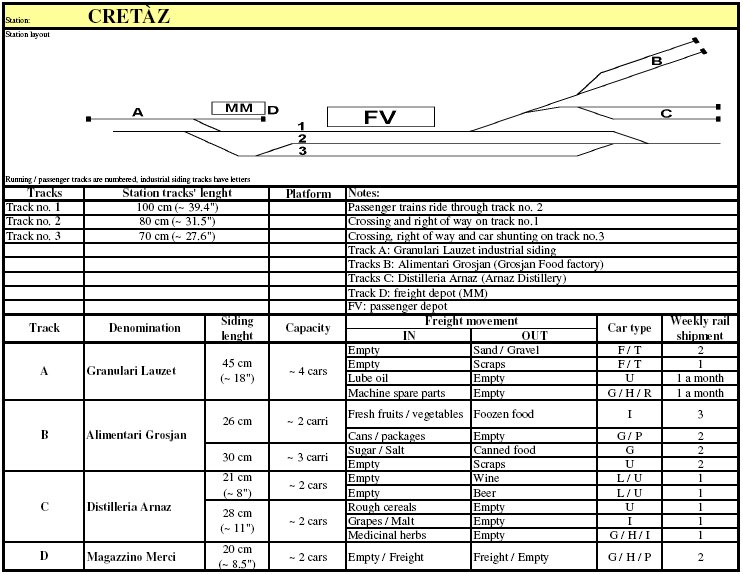
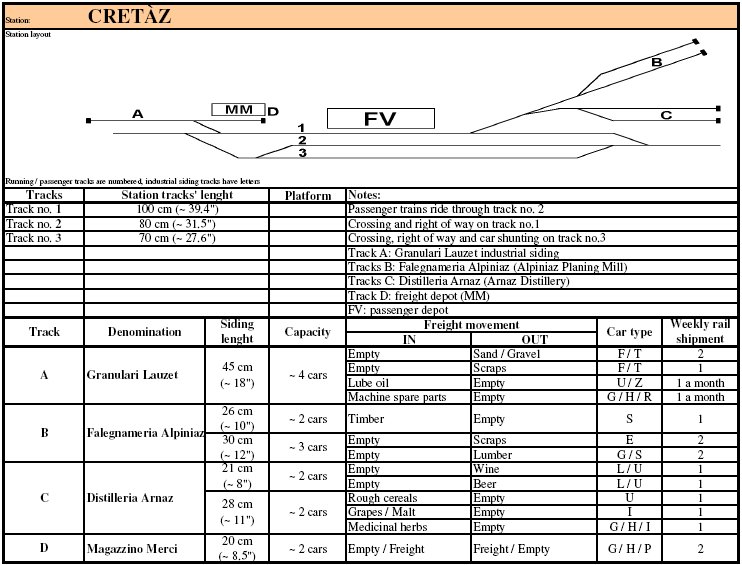
Today I draw Cretaz station's schematic plan so to fill out a rough waybill. I create two charts, one when I place Alimentari Grosjan (Grosjan Food Factory-yellow) and one for Falegnameria Alpiniaz (Alpiniaz planing mill-orange).
Oggi ho preparato il piano schematico della stazione di Cretàz ed una bozza di ordini di carico. Ho composto due tabelle, una per le sessioni con l’industria Alimentari Grosjan (giallo) ed una per quelle con la Falegnameria Alpiniaz (arancione).


01 agosto 2006

Industrial district / Raccordi industriali

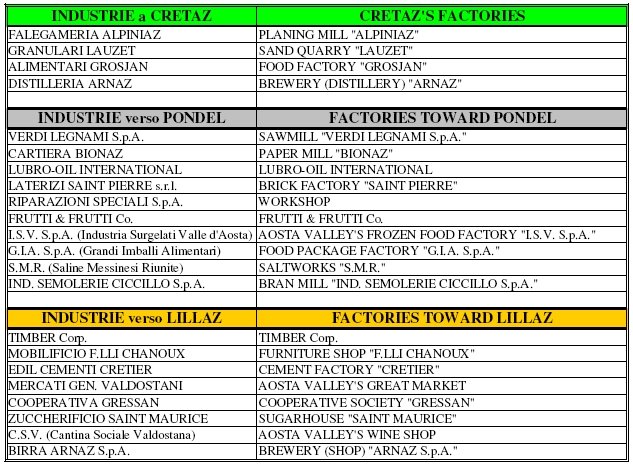
Building a layout does not mean you have only to cut wood or to place tracks, trees and houses. As written in my profile, I joined FREMO ITALIA's team few months ago and since then I start looking at model railroading from a different point of view, not so common in Italy nowadays: I will build a layout for shunting cars using a realistic timetable! First of all I placed some factories in the main town, Cretàz, then I installed many other industries along the railroad toward Pondèl and Lillàz, the Southern and Northern terminals. All the operational industries are shown in the table.
Costruire un plastico dedicato all’esercizio, per me, non significa solo tagliare il legno, posizionare binari, alberi e case. Come ho indicato nel mio profilo, mi sono unito al team FREMO ITALIA alcuni mesi fa e da allora ho iniziato a veder il modellismo ferroviario sotto un’altra luce, oggigiorno non molto comune in Italia: il mio desiderio è quello di costruire un layout adatto alla movimentazione dei treni con un orario estremamente realistico! Per cominciare ho installato alcune fabbriche nel paese principale, Cretàz, dopodiché ho piazzato parecchie industrie, raccordate alla ferrovia, verso Pondèl e verso Lillàz, i “capolinea” Sud e Nord. Tutte le industrie attive sono indicate in tabella.

Cretàz is a small town which has few industries (see updated plan), all with local names. They are:
  • Sand quarry "Lauzet" (Granulari Lauzet): a small industry settled near the river. It pick up empty cars and sets out cars full of sand, gravel, etc;
  • Food factory "Grosjan" (Alimentari Grosjan): a medium factory that works fresh fruits and vegetables; alternatively I can substitute it with planing mill "Alpiniaz" (Falegnameria Alpiniaz), which instead works lumber to manufacture furniture;
  • Brewery "Arnaz" (Distilleria Arnaz): a small distillery that mainly produce the world famous beer "Arnaz"; also it produces alcohols, especially made of medicinal herbs;
  • The depot (Magazzino Merci) near passenger station will help minor goods exchanges.

Cretàz è un piccolo centro abitato molto attivo con poche industrie (vedere l’aggiornamento dello schema), tutte con nomi tipici. Esse sono:

  • Granulari Lauzet: piccola cava vicino al fiume dalla quale si estraggono sabbia, sassi, ecc.;
  • Alimentari Grosjan: fabbrica di medie dimensioni che lavora verdura e frutta fresca. Alternativamente può essere sostituita dalla Falegnameria Alpiniaz, che, ovviamente, lavora legname vario per produrre mobilio;
  • Distilleria Arnaz: piccola distilleria che produce la famosa birra “Arnaz®”; inoltre ha anche una discreta produzione di alcolici a base di erbe mediche;
  • Magazzino Merci: situato vicino alla stazione, è utile per lo smistamento di merci generiche di medie e piccole dimensioni.

24 luglio 2006

Module construction / Costruzione dei moduli

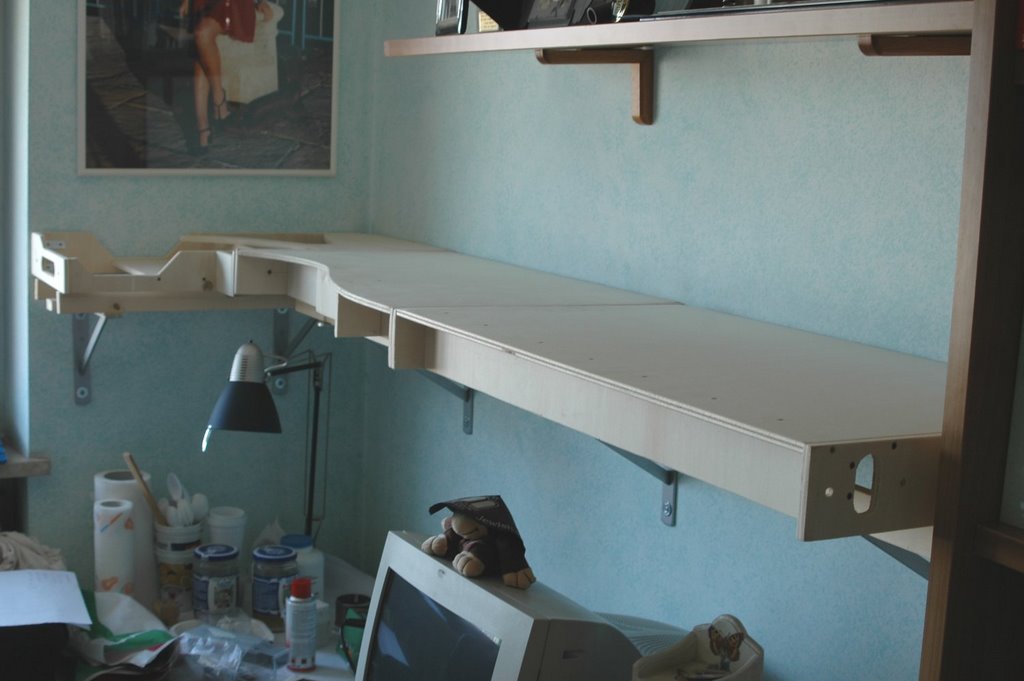
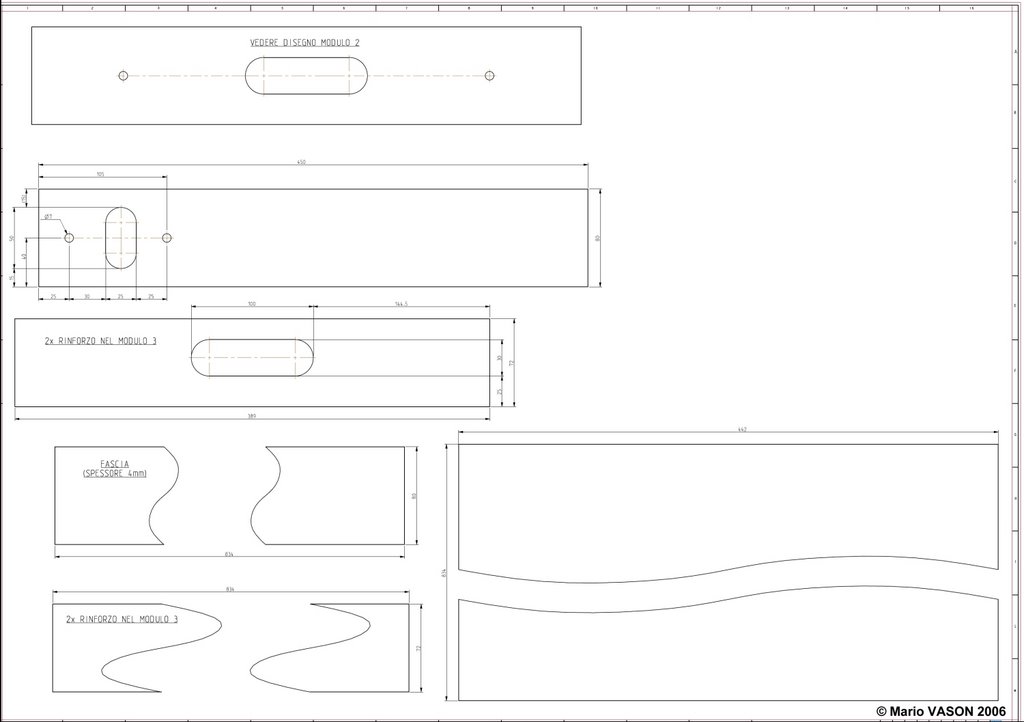
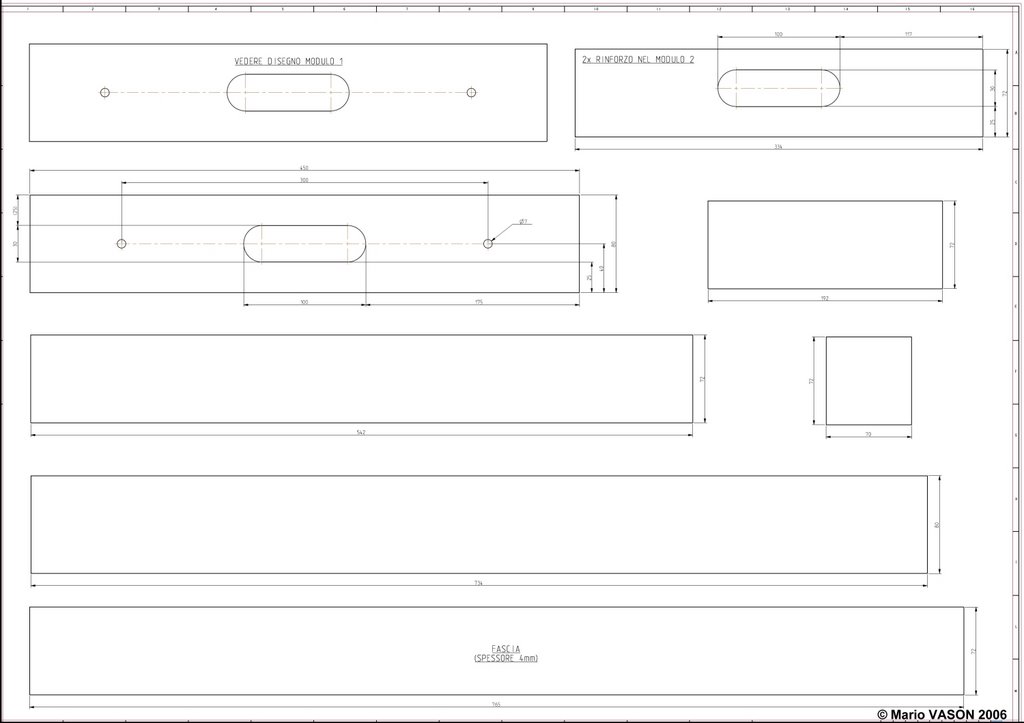
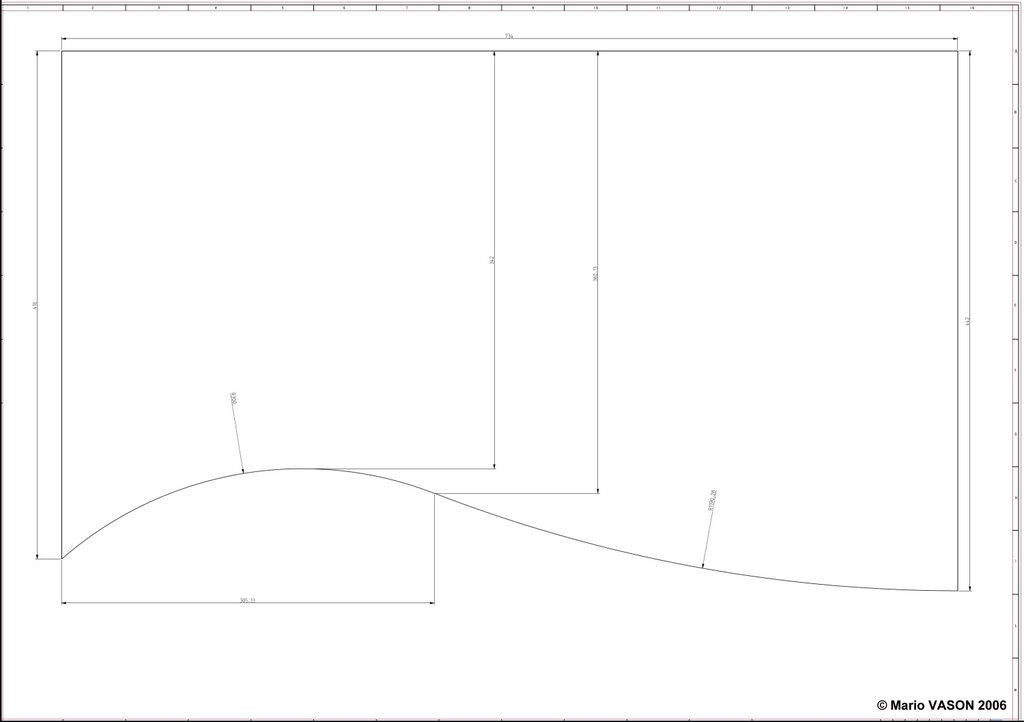
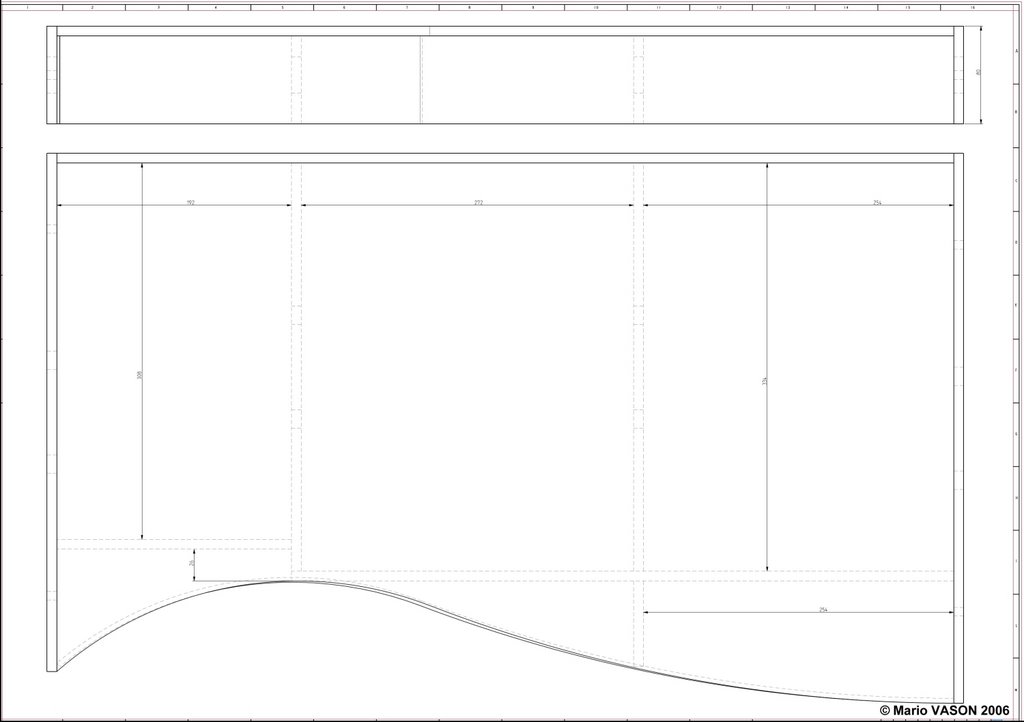
The past weekend, thanks to the hot “African” temperature, I worked in my cool garage on the three module frames. After cutting plywood as shown in drawings, I assembled the modules and then I placed them onto supports.
Il weekend appena trascorso, grazie alle temperature “africane”, ho potuto lavorare sui tre moduli in garage, al fresco. Dopo il taglio del compensato ho assemblato i componenti e poi ho appoggiato i moduli appena finiti sul telaio.


21 luglio 2006

Electrical layout / Circuito elettrico

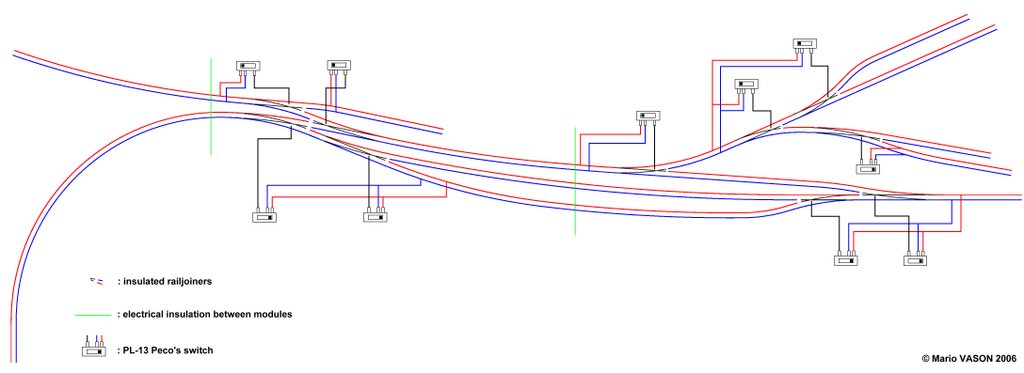
After a technical meeting with Andrea and Pik (Franco's nickname, a HO's friend of mine), I sketch the electrical layout you can see in the picture. It is only a proof sheet. All red and blue tracks have to be powered; electrofrog turnouts need Peco's PL-13 switches to change polarity when turned.
Al termine di una “riunione tecnica” con Andrea e Pik (soprannome di Franco, un mio amico “accazerista”) ho disegnato una bozza del circuito elettrico. Tutti i fili rossi e blu devono essere alimentati, inoltre gli scambi PECO Electrofrog necessitano di un interruttore dedicato (PECO PL13) per cambiare polarità quando vengono azionati.

20 luglio 2006

Third module drawings / Disegni del terzo modulo

Last module (Lillàz side) drawings are on line.
Ora anche I disegni dell’ultimo modulo (lato Lillàz) sono pronti.